T-04 · U.S. stop reference
What to do if police stop you: driving, walking, and searches
Use this short reference to orient yourself during an ordinary U.S. traffic stop or pedestrian encounter. Choose the setting, keep the immediate steps simple, and use the longer guide for legal background afterward.
Independent general education, not individual legal advice. State law, agency policy, and the facts of an encounter can change what applies. This page does not decide whether a particular stop or search is lawful.
If anyone needs immediate police, fire, or medical help in the United States, call 911. During an encounter, avoid physical resistance, keep movements calm, and explain before reaching for a document or other item. A quick reference cannot resolve a dispute at the scene.
Pick the situation in front of you
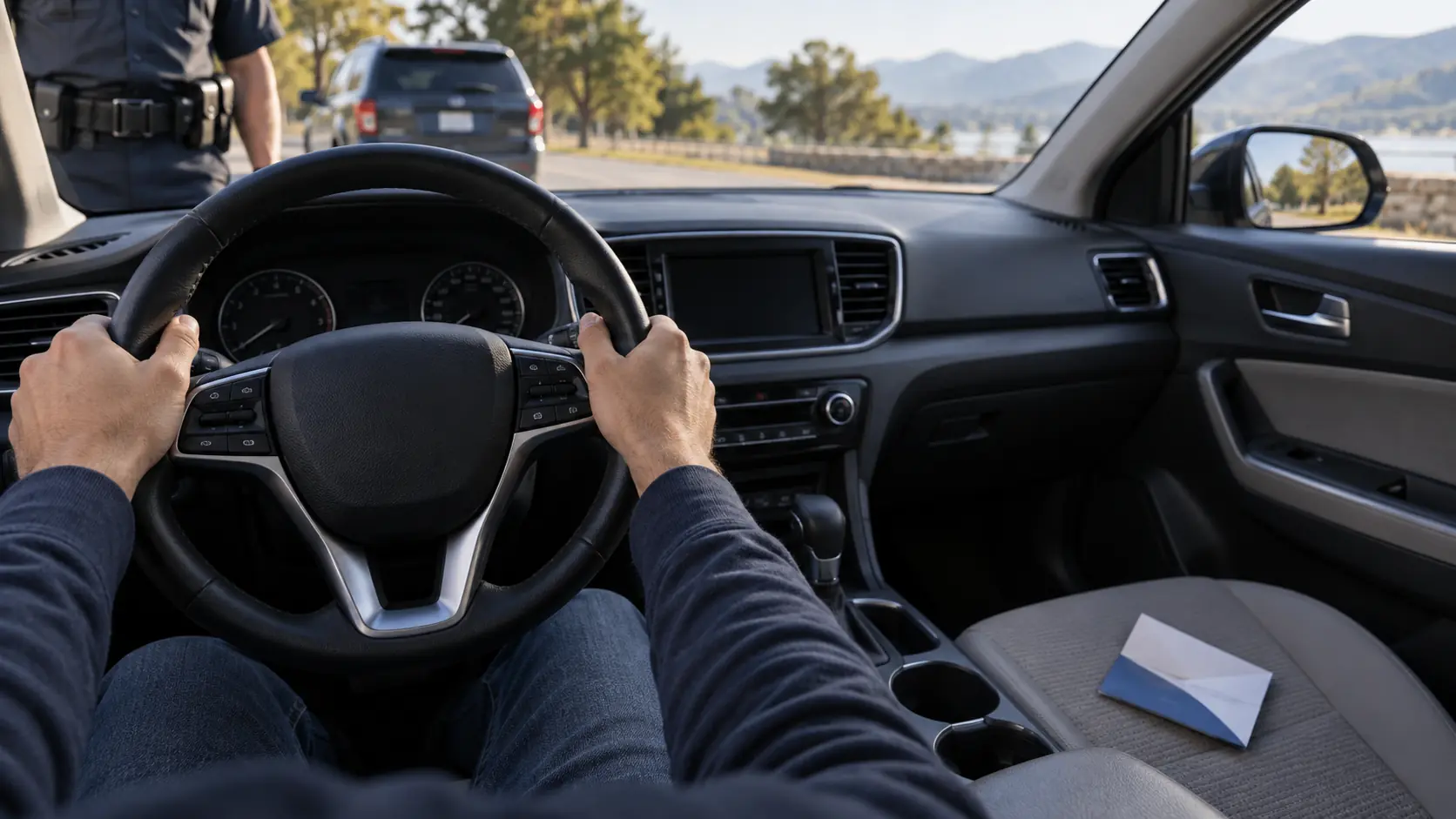
Stopped while driving
Start with the practical task: pull over or otherwise follow the immediate driving direction safely. Keep your hands where they can be seen, and say where you need to reach before looking for documents.
A driver may have to provide a license, registration, and proof of insurance. That document duty is separate from answering investigative questions. Read any citation, warning, or receipt before you leave and keep it with the date and location. The ACLU’s questioning guide is a civil-rights resource with more detail about drivers and questioning.
Stopped while walking
Ask one clarifying question: “Am I free to leave?” If the answer is yes, leave calmly. If the answer is no, do not physically resist while trying to determine the legal reason in the moment.
Identification requirements can depend on state law and the basis for the stop. Do not assume every person on foot must carry identification, and do not assume every request for a name can be refused. The ACLU’s stop guide describes practical safety considerations; it is not a substitute for the law where the encounter occurs.
Asked for permission to search
Be clear without escalating: if you choose not to give permission, say plainly, “I do not consent to a search.” Do not physically prevent a search or turn the encounter into an argument about the legal rule.
Declining consent does not settle whether a search can proceed. The U.S. Courts Fourth Amendment overview explains that the Constitution addresses unreasonable searches and seizures, while courts consider the facts and applicable legal basis. Preserve those facts for later advice instead of trying to decide the issue roadside.
After the encounter is over
Record facts, not conclusions: note the date, approximate time, location, agency name, names or badge numbers if provided, paperwork, and what you personally saw or heard. Keep original photos, videos, and documents without editing them into a single summary.
If you need advice about a citation, arrest, search, or complaint, bring that record to a licensed attorney in the relevant jurisdiction. The site’s correction inbox is not a confidential legal channel.
Where this quick reference stops
This page is limited to ordinary state or local traffic and pedestrian encounters. It does not cover immigration or border encounters, probation or parole conditions, warrants, arrest processing, school rules, or breath, blood, and field-sobriety testing. Those settings can involve rules this short comparison cannot safely summarize.
For the difference between a voluntary conversation, detention, search consent, and next steps after an encounter, read the full U.S. police stops guide. To locate an agency’s public contact details, use the station finder and verify the result through the agency’s official website.
For cited state statutes that address identifying information during qualifying stops, use the stop-and-identify law lookup. It leaves jurisdictions without a direct verification as unresolved rather than inferring a yes-or-no answer.
Sources and scope
- U.S. Courts: What Does the Fourth Amendment Mean? — a constitutional overview of searches and seizures.
- ACLU: Stopped by Police — civil-rights guidance on safety and encounters.
- ACLU: What To Do When Encountering Questions from Law Enforcement — civil-rights guidance on questioning and identification.
- 911.gov: Calling 911 — U.S. emergency contact guidance.