Current cases · Traffic stops
Mario Rosales Police Stop Lawsuit: What the Fifth Circuit Ruled in 2026
The Fifth Circuit issued a new ruling in the Mario Rosales traffic-stop lawsuit. See what survived, what did not, and what the court actually decided.
Independent educational reference. Not a police agency, hiring decision, or legal opinion.How we use sources.
What did the Fifth Circuit decide in the Mario Rosales police stop lawsuit?
The September 22, 2026 decision inRosales v. Terrellarose from a civil-rights lawsuit over a June 2022 traffic stop in Alexandria, Louisiana.
Plaintiffs Mario Rosales and Gracie Lasyone alleged that two Alexandria police officers violated their constitutional rights by initiating a traffic stop without adequate reasonable suspicion, expanding the detention beyond its lawful purpose, conducting unlawful searches, and preventing them from using their own phones to record the encounter.
The officers sought judgment on the pleadings based on qualified immunity. After the district court declined to end the claims at that stage, the officers appealed.
The Fifth Circuit split the result. It affirmed the district court as to the Fourth Amendment claims and reversed as to the First Amendment recording claim.
That procedural posture matters. The ruling does not mean a jury has found the officers liable, nor does it establish that every allegation in the complaint has been proven.
How did the traffic stop begin?
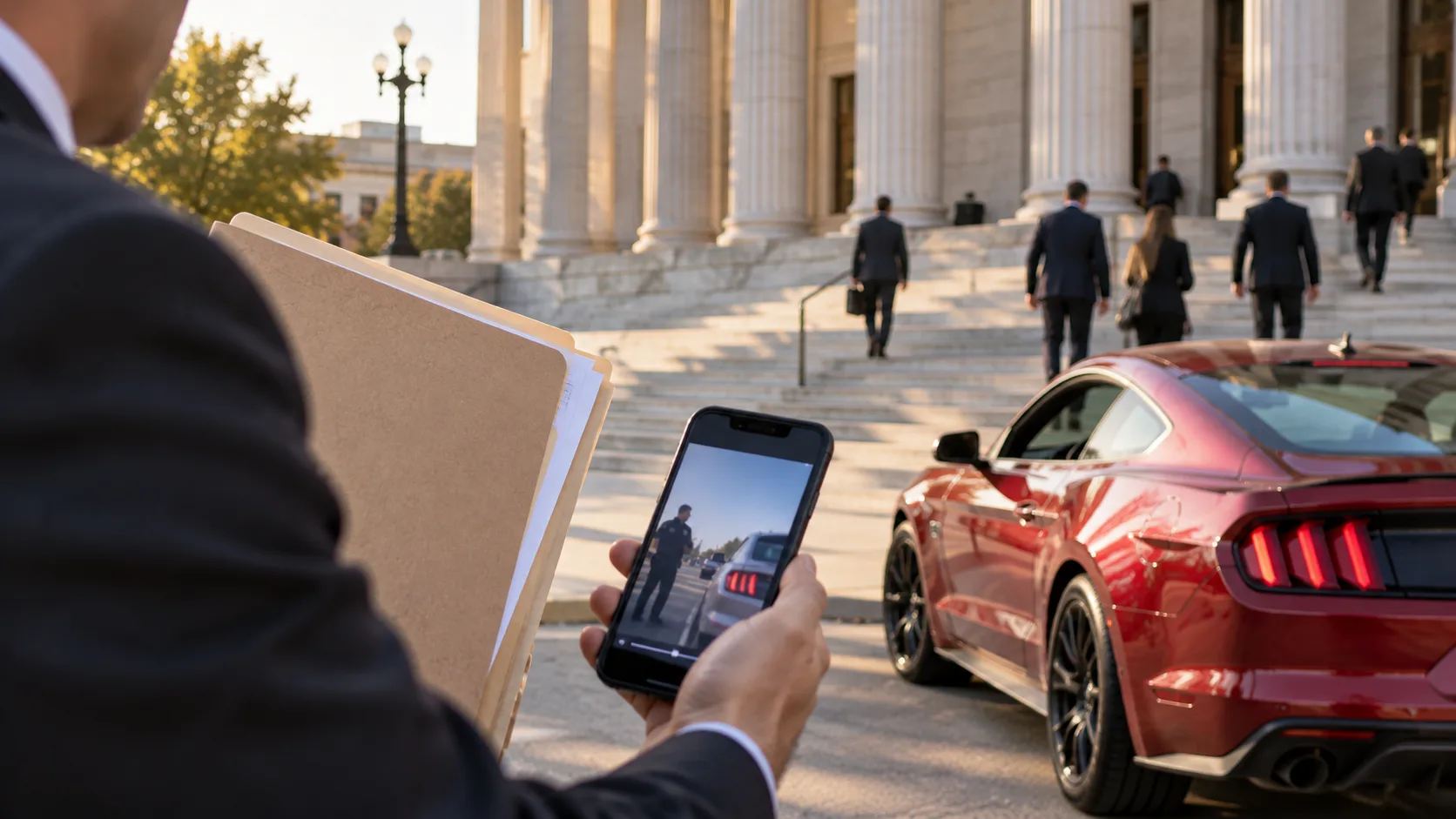
According to the facts described in the appellate opinion, Rosales was driving a Mustang with New Mexico plates in Alexandria in June 2022, with Lasyone as his passenger.
The officers later identified an alleged failure to signal as a basis for the stop. The plaintiffs' complaint, however, alleged that Rosales had driven lawfully and that the officers lacked an objective basis to stop the vehicle.
Video evidence was part of the pleadings. That created an important procedural question: when a lawsuit includes video, courts do not have to accept an allegation that the video blatantly contradicts.
The Fifth Circuit concluded that the video did not resolve the relevant signaling dispute so clearly that the plaintiffs' allegations could be rejected at the pleading stage.
In other words, the appellate court did not announce that Rosales definitely obeyed every traffic rule. It decided that the complaint plausibly alleged an unjustified stop and that the available video did not conclusively defeat that allegation for purposes of the officers' early qualified-immunity motion.
Why this was not a final trial ruling
This distinction is essential when reading headlines about qualified-immunity appeals.
The officers appealed the denial of a Rule 12(c) motion for judgment on the pleadings. At that stage, the court asks whether the properly considered allegations are sufficient to state a legal claim, subject to rules governing materials such as video incorporated into the pleadings.
The Fifth Circuit therefore repeatedly described the plaintiffs as having plausibly alleged constitutional violations.
That wording does not mean the allegations have already been proven through a completed trial.
Evidence can still be developed, facts can remain disputed, and later proceedings can produce a different result depending on the record.
A current case explainer should preserve that distinction rather than converting an appellate pleading decision into a final liability verdict.
The court allowed the initial-stop Fourth Amendment claim to continue
A traffic stop is a seizure under the Fourth Amendment. The Fifth Circuit explained that an officer must have an objectively reasonable basis to suspect a traffic violation or other unlawful activity before making the stop.
The officers argued that Rosales committed signaling violations.
But under the procedural posture of the case, the panel concluded that the complaint and video did not require the court to accept that account. The plaintiffs plausibly alleged there was no valid traffic violation supporting the stop.
The panel therefore allowed the Fourth Amendment claim challenging the stop at its inception to continue.
This does not change the general rule that an objectively valid traffic violation can support a stop even if an officer may have another subjective investigative motive.
The important issue in Rosales was whether the alleged objective traffic basis existed at all.
The lawsuit also challenged how the stop expanded
The plaintiffs did not challenge only the first moment of the seizure. They also alleged that the officers extended the scope and duration of the encounter without sufficient justification.
During the stop, officers questioned Rosales and Lasyone about matters including weapons, drugs, arrests, their activities, and their background.
The Fifth Circuit did not treat ordinary questioning by itself as the decisive constitutional problem.
Instead, the panel focused on alleged searches and whether the stop was prolonged to conduct investigative activity unsupported by reasonable suspicion.
The court concluded that the plaintiffs plausibly alleged an unlawful extension to the extent the detention was prolonged to conduct the challenged searches.
That distinction fits the broader traffic-stop framework: officers can ask questions during an otherwise lawful stop, but the Fourth Amendment places limits on extending a seizure beyond its lawful mission without additional justification.
Our separateunrelated-questions guideexplains that general rule without relying on the disputed facts of this case.
What did the court say about the frisk and pocket search?
The decision also addressed searches of Rosales during the encounter.
Rosales told officers there was a firearm in a bag in the vehicle while denying that he had a gun on his person.
One officer performed a pat-down. Another officer was alleged to have later searched Rosales's pockets.
The Fifth Circuit concluded, under the pleading-stage record, that Rosales plausibly alleged the frisk lacked the reasonable suspicion required for a protective weapons search.
The panel emphasized that lawful firearm possession does not automatically authorize officers to search or seize a person simply because a firearm exists.
The panel also rejected the argument that the later pocket search necessarily fell within a lawful protective frisk or valid consent at this stage.
Those claims therefore survived the qualified-immunity challenge.
This holding should not be generalized into a rule that officers can never frisk someone during a traffic stop involving a firearm. A protective frisk depends on whether the required armed-and-dangerous reasonable suspicion exists under the circumstances.
The phone-recording claim came out differently
The First Amendment part of the decision requires especially careful wording.
Rosales and Lasyone alleged that officers prevented them from using their phones to record the encounter while they were detained.
The Fifth Circuit previously recognized a general First Amendment right to record police, subject to reasonable time, place, and manner restrictions, in Turner v. Lieutenant Driver.
But the Rosales panel concluded that Turner did not clearly establish the more specific right asserted here: the right of a person who is themselves detained during a traffic stop to use a handheld phone to record that detention.
That distinction mattered because the officers asserted qualified immunity.
The panel therefore reversed the district court on the First Amendment claims.
Critically, the court expressly avoided deciding whether the plaintiffs had sufficiently alleged an underlying First Amendment violation. It resolved the issue through the clearly-established-law component of qualified immunity.
A headline saying “Fifth Circuit rules drivers have no right to record police” would therefore go beyond what the opinion decided.
What did qualified immunity mean in this appeal?
Qualified immunity can protect government officials from damages claims unless the plaintiff shows a violation of a constitutional or statutory right and that the relevant right was clearly established under the applicable legal standard.
The Fifth Circuit analyzed the officers' actions claim by claim.
For the Fourth Amendment theories, the court concluded that the allegations were sufficient at this stage and that the relevant constitutional principles governing unjustified stops, unlawful searches, and detention unsupported by the required suspicion were sufficiently established to prevent dismissal on qualified-immunity grounds.
For the First Amendment phone-recording theory, the result was different because the panel found no precedent clearly establishing the specific right of a detained traffic-stop occupant to personally record using a phone while the detention was occurring.
This is why the same officers could lose the qualified-immunity argument on several Fourth Amendment claims while winning it on the First Amendment claim.
What the Fifth Circuit did not decide
The decision is easier to understand by listing what it does not establish.
- It does not finally find the officers liable for damages.
- It does not hold that every allegation made by Rosales and Lasyone is proven fact.
- It does not establish that police may never ask unrelated questions during traffic stops.
- It does not establish that the presence of any firearm makes a frisk unlawful.
- It does not hold that people can never record police during a traffic stop.
- It does not create a nationwide Supreme Court rule.
The opinion itself is also designated unpublished.
Its immediate procedural effect was narrower: the Fourth Amendment claims survived this appeal at the pleading stage, while the officers prevailed on the First Amendment qualified-immunity issue.
Why this 2026 ruling matters for traffic-stop questions
The case brings several traffic-stop issues that people commonly search for into one recent federal appellate decision.
First, the initial stop still needs an objective legal basis. A claimed traffic violation matters only if the facts support it under the applicable law.
Second, an initially lawful traffic stop does not create unlimited authority to prolong detention or conduct unrelated searches.
Third, officer-safety searches remain subject to constitutional limits. A firearm-related fact can be relevant without automatically settling whether a person may be frisked.
Fourth, the right to record police can become more legally complicated when the person holding the phone is themselves detained rather than standing nearby as an uninvolved observer.
Finally, qualified-immunity decisions must be read precisely. A court can find that a right was not clearly established without deciding that the challenged police conduct was affirmatively constitutional.
What to read next
For the general rules that exist independently of this lawsuit, start withWhat Are My Rights During a Traffic Stop?.
For questioning during a roadside detention, readCan Police Ask Unrelated Questions During a Traffic Stop?. For detention after the traffic mission should be complete, readCan Police Extend a Traffic Stop After Writing a Ticket?. For frisk and restraint questions, use thequick stop-rights reference.
This article reports and explains the September 22, 2026 appellate decision. It is not a prediction of the final outcome of the Rosales litigation and should be updated if later proceedings materially change the case.
Frequently asked questions
What happened in the Mario Rosales police stop lawsuit?
Mario Rosales and Gracie Lasyone sued two Alexandria, Louisiana police officers over a 2022 traffic stop. On September 22, 2026, the Fifth Circuit allowed their Fourth Amendment claims to continue at the pleading stage but ruled for the officers on the First Amendment qualified-immunity issue concerning the plaintiffs’ attempt to record while detained.
Did the Fifth Circuit rule that the traffic stop was definitely unconstitutional?
No. The appeal arose from a motion for judgment on the pleadings. The court decided whether the allegations, viewed under that procedural standard and together with the referenced video evidence, plausibly stated constitutional claims and overcame qualified immunity. It was not a final trial finding that every disputed allegation was proven.
Did the court say passengers and drivers cannot record police during a traffic stop?
No. The court did not decide whether the plaintiffs ultimately had a First Amendment right to record in those circumstances. It held that existing precedent had not clearly established the specific right of a person detained during a traffic stop to use a handheld phone to record the encounter, so the officers received qualified immunity on that claim.
Is Rosales v. Terrell a Supreme Court decision?
No. It is a September 22, 2026 decision of the U.S. Court of Appeals for the Fifth Circuit, and the opinion is designated unpublished. It should not be described as a nationwide Supreme Court rule.
Sources and verification
Use the linked source for its stated jurisdiction. Requirements and procedures can change; check the current agency notice before acting.
- U.S. Court of Appeals for the Fifth Circuit: Rosales v. Terrell, No. 25-30650 checked
- GovInfo: Rosales v. Terrell — Fifth Circuit opinion filed September 22, 2026 checked
- Institute for Justice: Louisiana Traffic Stop case page and filings checked
Found an error? Send the page URL and a supporting source to[email protected].